A special encounter with court music and Jeongganbo
Synopsis
Experience a special connection between two artists transcending time and space! A modern musician, currently facing a creative slump, meets Sejong the Great, the legendary polymath of the Joseon Dynasty.
Seeking ‘hip’ and fresh inspiration, the modern musician is guided by King Sejong through the world of beautiful court music and the ‘Jeongganbo’—the very path to the sound. Can the musician finally nurture their own ‘seeds of sound’ through this extraordinary encounter?
Performance Information

Dates
May 20 (Wed)–23 (Sat), May 27 (Wed)–30 (Sat), June 4 (Thu)–5 (Fri)
Artistic Director (Court Music Orchestra): Lee Geon-hoe
Artistic Director (Dance Theater): Kim Chung-han
Cast
Kim Dae-jin (as King Sejong)
Yoo Ji-ri-san (as the Musician)
Ensembles
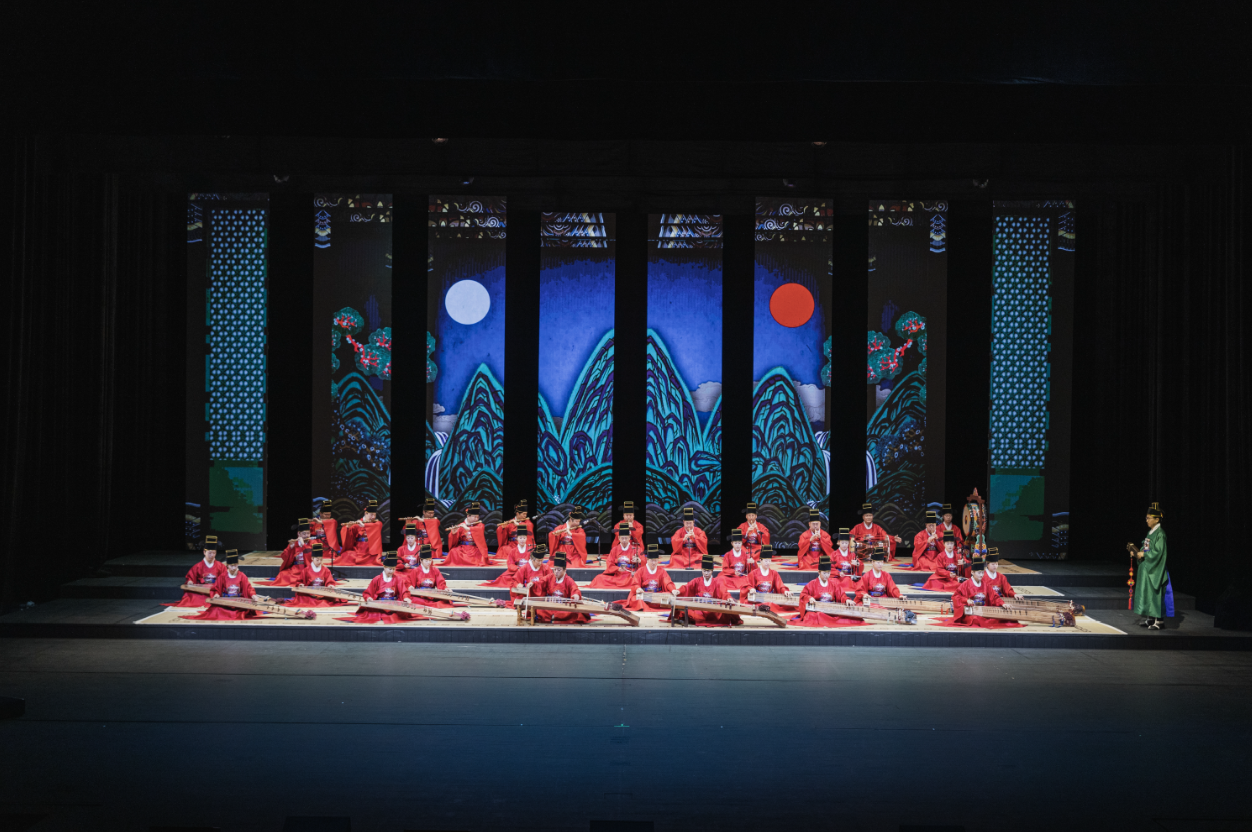
Performance: National Gugak Center Jeongak Ensemble & Dance Theater
Program Highlights
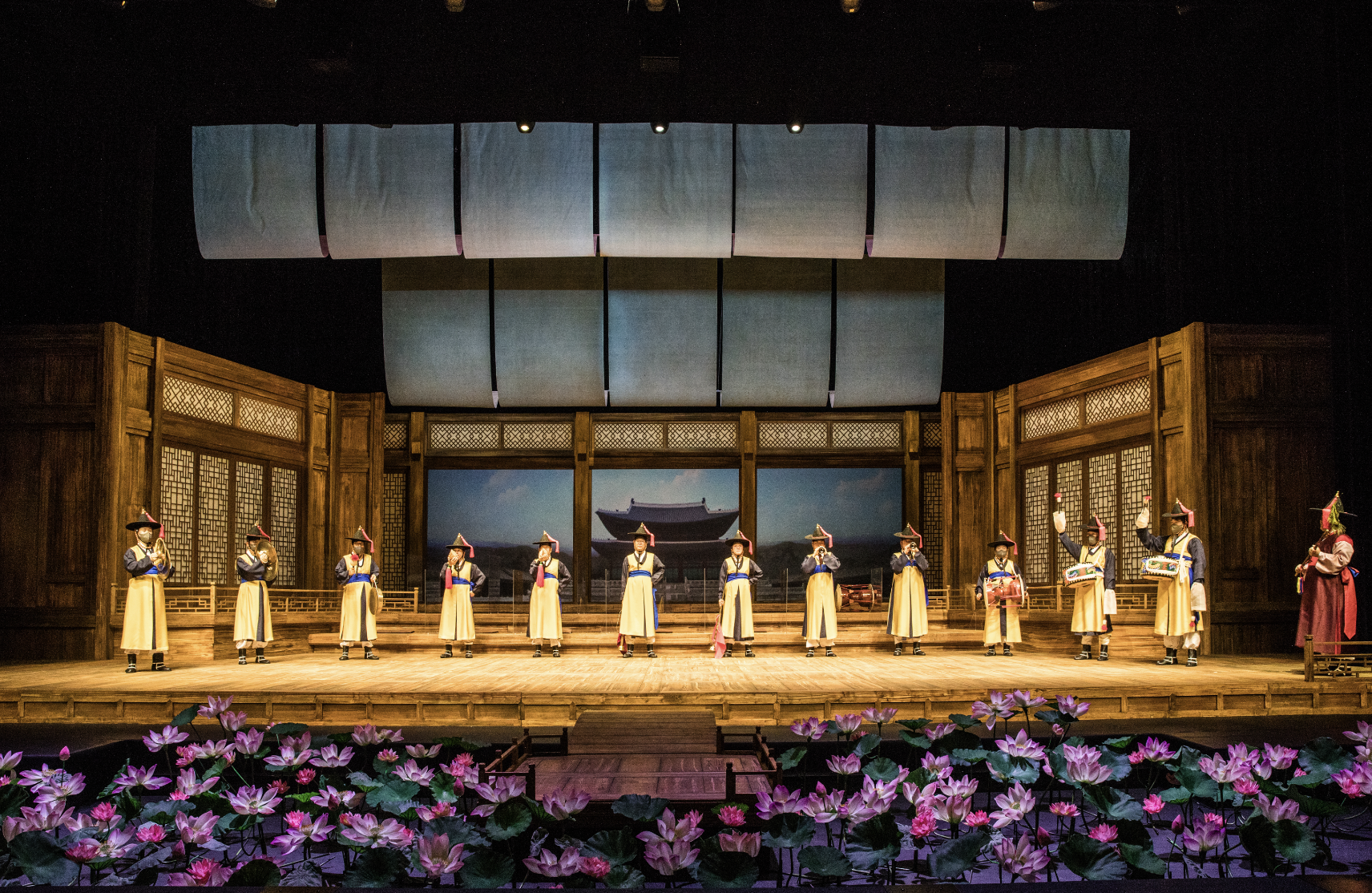
Daechwita
‘Daechwita’ literally means “to blow and hit.” It was traditional military music used during the King’s processions or military marches. When the conductor shouts, “Myeong-geum-il-ha-dae-chwi-ta!” (Strike the gong and begin Daechwita!), the performance commences with percussion and wind instruments like the Taepyeongso, Nabal, and Nagak.
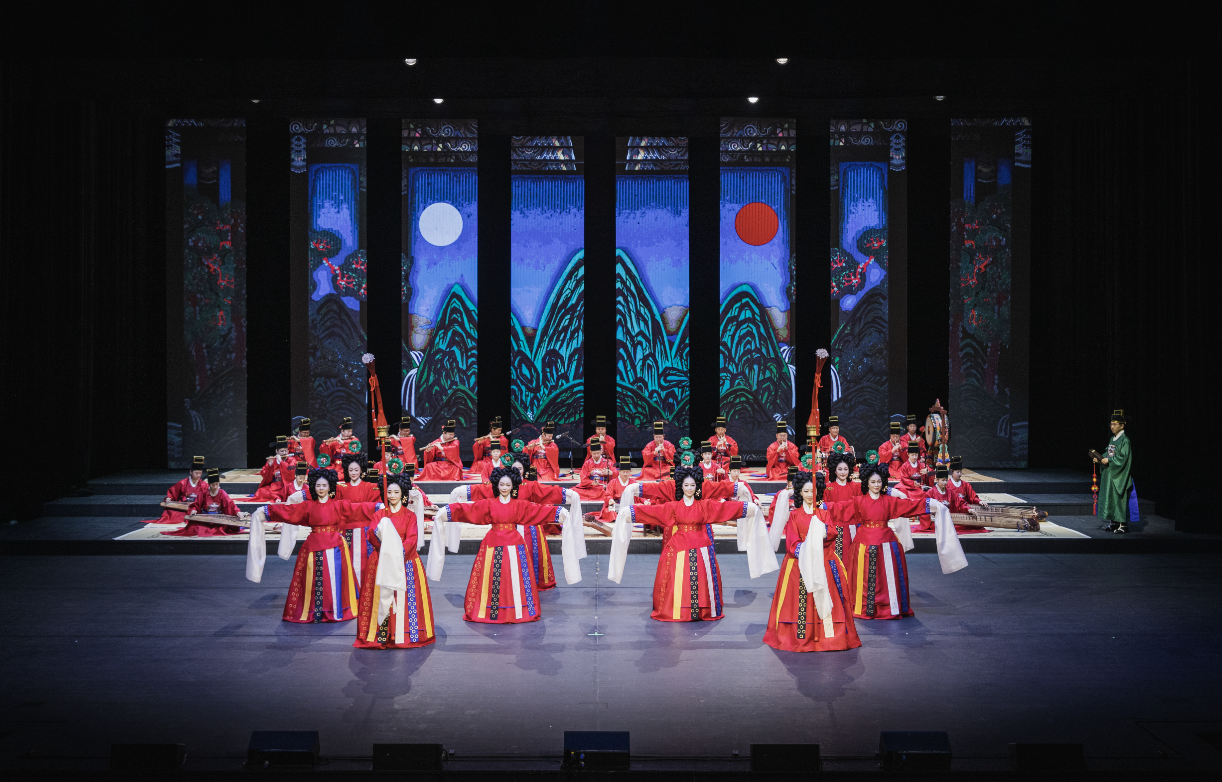
Bongraeui
Created in the 27th year of King Sejong’s reign (1445) following the composition of the Yongbieocheonga, this court dance depicts the legendary Phoenix (Bonghwang) appearing in times of peace and prosperity. It embodies King Sejong’s yearning for a peaceful era ruled by virtue.
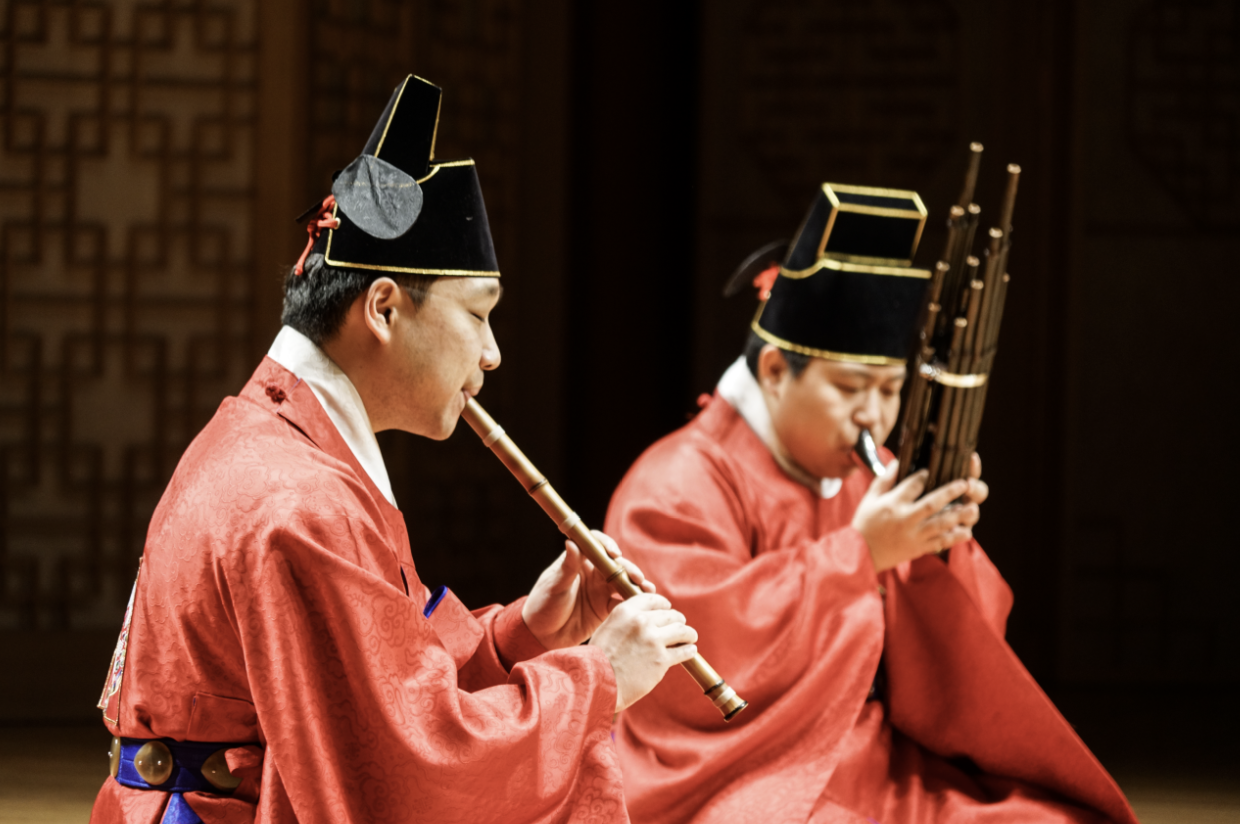
Suryongeum
Meaning “the recitation of a dragon in the water,” this is a piece of refined traditional music. It features a harmonious blend of the Saenghwang (a multi-piped wind instrument), the delicate Danso (flute), and the deep, resonant tones of the Ajaeng (bowed string instrument).
Chunaengjeon
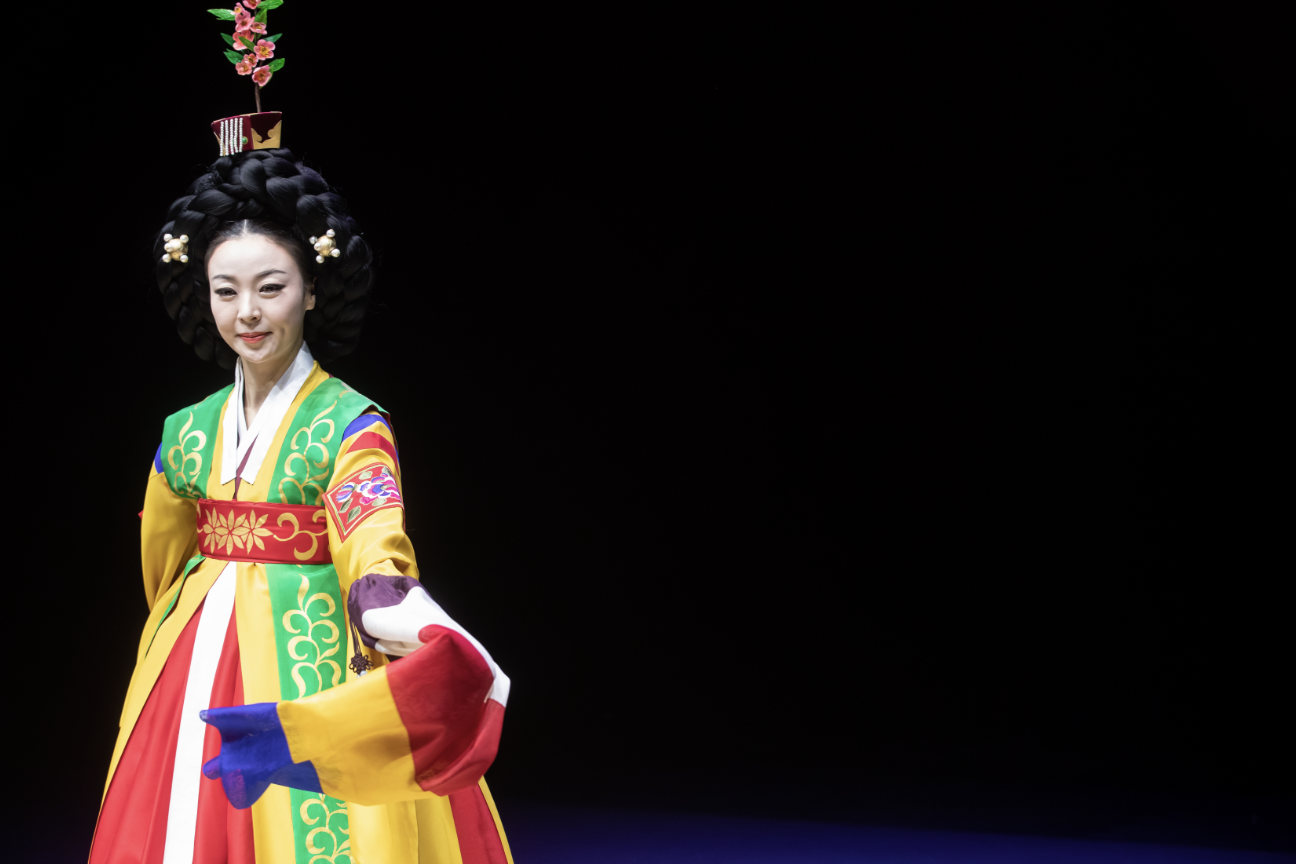
This court dance depicts an oriole singing on a willow branch on a spring morning. Created by Crown Prince Hyomyeong in the late Joseon Dynasty, the dancer wears a yellow costume and dances alone on a flower-patterned mat, capturing the delicate movements of a bird.
Cheoyongmu
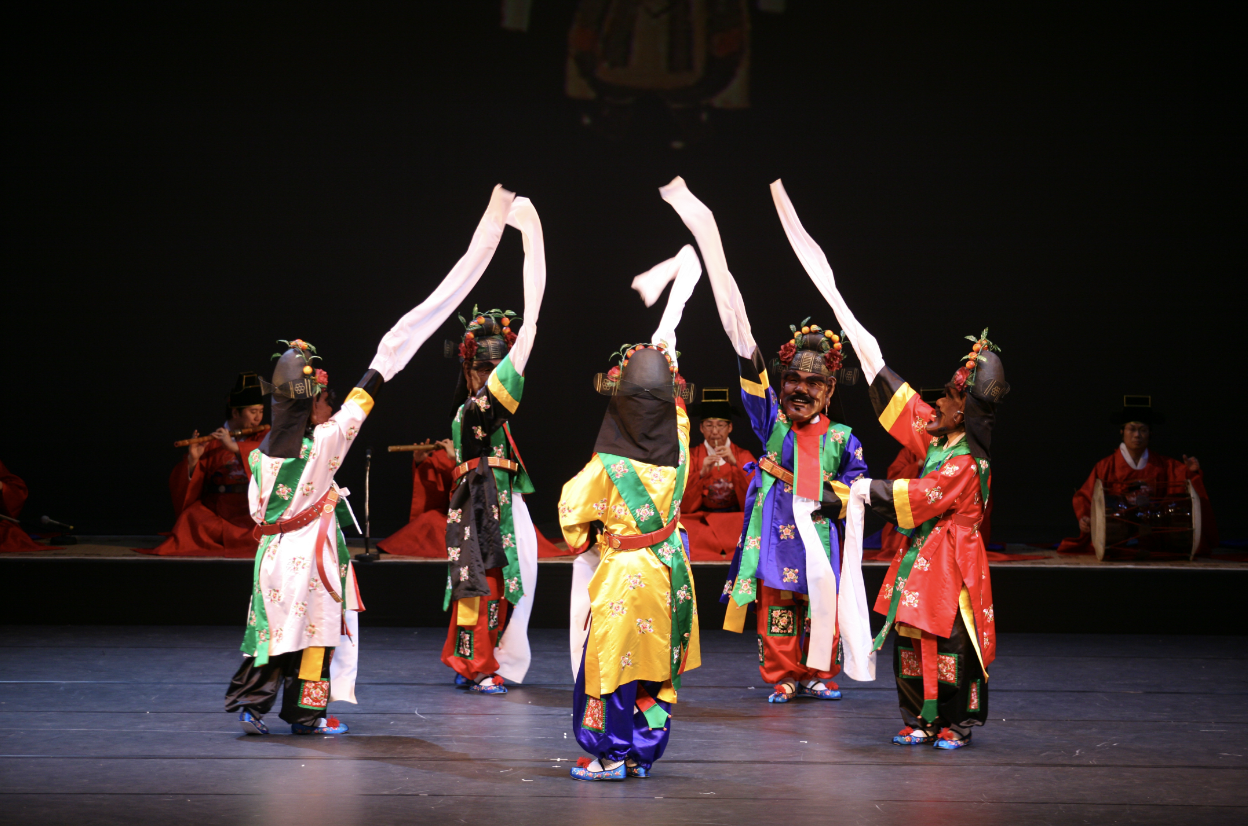
Originating from the Silla Dynasty legend of Cheoyong, the son of the Dragon King, this dance was performed to expel evil spirits and invite good fortune. It is a powerful five-person group dance known for its grand, earth-like, and inclusive energy.
Yeominrak
Meaning “Joy with the People,” this piece was composed by King Sejong following the creation of Hangeul (the Korean alphabet). It was originally performed as an accompaniment to the Yongbieocheonga, celebrating the founding of the Joseon Dynasty. Today, it is performed as an instrumental piece, representing the King’s desire to share happiness with his subjects.
Script
The Seed of Sound
Chapter 1: Daechwita
Musician: Ah, this isn’t it. What is this? Where am I? Is this a palace? Sujeongjeon in Gyeongbokgung… When did I walk all the way here? Sigh… anyway, what should I do? I can’t write anything. How can I not have a single musical inspiration? Is there something truly new, not just the usual stuff? Something new, something hip! Please help me. Please! If you just give me an idea, I’ll do anything! If anyone is there, please answer me!
Marshal: Myeong-geum-il-ha Dae-chwi-ta Ha-rap-sin-da![Strike the gold! Let the Daechwita begin!]
Musicians: Ye-i! (Yes!)
Marshal: Ha-ra-geum Ha-ra! (Stop the gold! Stop the music!)
Musician: Uh, excuse me? Who are you? Is there an event here today? Why is nobody answering me? Hey!
Sejong: Among those gathered in this palace today, there is one who has lost his sound! Is it you? Or is it you?
Musician: Uh… over here!!! I think it’s me.
Sejong: You are the one who called me.
Musician: Yes… but who are you? Wait a minute, where am I?
Sejong: This is the palace, and I am the King.
Musician: Ah, is there some kind of festival at Gyeongbokgung today?
Sejong: Seeing your state, I should call for the Royal Physician.
Musician: Are you really a King?
Sejong: Yes.
Musician: Yeah, right…
Sejong: Hear ye— summon the Royal Physician. It seems this lad’s mind is—
Musician: No, wait a second. So… if you are the King and this is the palace… What, did I die from overworking and stress? Or is this a dream?
Musician: Ow-w-w-w! Not a dream, then…
Sejong: Why did you call for me so desperately?
Musician: Well, it’s not like I called for the “King” specifically, but… you see, I make music. I’ve been struggling so much with composing that I just shouted at the sky for anyone to help…
Sejong: Then you have found the right person.
Musician: No, I don’t need the kind of “difficult” music that Kings listen to.
Sejong: Difficult music?
Musician: Yes, difficult music. I don’t like that kind of stuff…
Sejong: Hmm. Indeed. Difficult music is only shunned by the people. But how can banquet music be difficult! The tempo is slow, but the melody is magnificent. Listen to this piece first before you speak.
Chapter 2: Bongraeui
Musician: Wow, I thought it was just simple court music, but the rhythm and order within it are as precise as a mathematical design.
Sejong: Music is not merely a sound to please the ears. It must contain harmony, praying for the peace of the nation and blending the principles of heaven and earth with the human heart.
Musician: Wow, that’s amazing! But “Wang-nim” (Mr. King)…
Sejong: “Wang-nim, Wang-nim.” It is quite unpleasant to the ear. It does not fit the etiquette. Try calling me “Jeonha” (Your Majesty).
Musician: Ah, yes. “Jeon-hwa” (Telephone)!
Sejong: No, not “Jeon-hwa.” “Jeonha.”
Musician: Oh, yes, yes. “Jeonha~” (Your Majesty).
Sejong: That’s better. Now it is comfortable to hear. (Taking out Jeongganbo, the musical notation) Anyway, to continue our story— Do you know what this is?
Musician: I have no idea. I’ve never seen anything like this before.
Sejong: This is a place for sound.
Musician: A place for sound… wait, is this… sheet music?
Musician: Ah! Since there are these boxes (grids), the sound can’t run away.
Sejong: It is not about capturing the sound, but about giving it a place to stay. Just like words, sound also needs a path.
Musician: Huh? So you recorded the length of the sound visually by matching it to the boxes?
Sejong: Exactly.
Musician: This is the exact same principle as the grid system in the sequencing programs (DAW) we use these days! Incredible… Your Majesty was already thinking digitally.
Sejong: I don’t know what you mean, but it sounds like a compliment, so I feel good. Anyway, sound is invisible and easily vanishes, does it not? I simply recorded the “timing” of the sound in boxes so that any of my people could sing with the same breath. That aside, what is the music of the era you live in like?
Musician: People all over the world dance to our “K-POP.” I mean, to put it simply, even people across the ocean sing along to our songs. But sometimes I worry. Since we focus only on provocative and fast beats, I wonder if we are missing the essence of “music” that you mentioned.
Sejong: The speed of music differs with each era. However, if there is “Yeominrak”—the heart that wishes to enjoy together with the people—within it, that is enough. The true completion of music shines only when the performer and the listener finally become one.
Musician: The heart to enjoy with the people… In the end, it’s about communication. I’m suddenly overflowing with inspiration to mix a modern bass loop with the grand sounds of traditional instruments that contain your spirit!
Sejong: Is that so? Then shall I give you a different kind of inspiration this time?
Musician: Yes! I’d love that!
Sejong: Saengso-byeongju Suryongeum.
Musician: Saengso… ju…? Why are you suddenly looking for “Soju” (alcohol)?
Sejong: No, no. Not “Soju,” but “Saengso-byeongju Suryongeum.” It means playing the sound of a dragon murmuring underwater using two wind instruments, the “Saeng” and the “So.” It focuses on the aesthetics of restraint, empty space, and breath.
Chapter 3: Suryongeum (Saengsobyeongju)
Musician: Wow… it feels like the surface of the water is calm, but a massive being is moving slowly beneath it. They play together, but they aren’t exactly the same! The “Saeng” is more three-dimensional and harmonic, while the “So” feels like a linear and lonely melody.
Sejong: Hahaha. You have an accurate ear for a musician. Correct. It is music that feels like mist settling over the ripples.
Musician: Mist over ripples… I always tried to listen to and create complex music just to look good to others. Always loud and flashy… But listening to music that carries weight without chasing after people gives me brand new inspiration.
Sejong: Hmm. Loud and flashy is good, but perhaps the most important thing is “how delicately one can expand the world even within a small space.”
Musician: “A world that delicately expands from a small space.” I don’t fully get it, but your words sound really cool.
Sejong: Hahaha. It is better to show than to explain.
Chapter 4: Chunaengjeon
Musician: Wow… this feels completely different from “Bongraeui” earlier. I thought all court dances were group dances.
Sejong: Chunaengjeon was exceptionally created as a solo dance to show concentrated beauty and emotion. It is a structure that reveals every breath, every gaze, and even the fingertips of a single person.
Musician: Ah… so instead of a grand spectacle of many, it’s an extreme magnification of a single being. We have something like this in K-pop too! During a “Dance break” where only the drum beat plays, the “Main dancer”—the best dancer in the team—comes out and dances—
Sejong: Easy now. “Dance break”… “Main Dan-seo”… “Dan-seo” (clue)?! You rascal! What “clue” (Dan-seo) have you found!
Musician: No, no! Not a “clue”! Main dancer. Repeat after me. Main.
Sejong: Main.
Musician: Dancer.
Sejong: Dancer.
Musician: Put it together.
Sejong: MAIN DANCER.
Musician: Oh, your pronunciation is great! Anyway, they perform as a group to create a spectacle, and then one member who dances the best performs a solo. Just like Chunaengjeon! Of course, modern dances are more passionate than Chunaengjeon…
Sejong: A dance performed by many, you say. Do you know of “Cheoyongmu”?
Musician: Uh… I think I’ve heard of it. A dance to drive away diseases? Something like that.
Sejong: Correct. It is a dance to pray for longevity and abundance. Would you like to see?
Musician: Yes!
Chapter 5: Cheoyongmu
Musician: Seeing this after the solo dance, the feeling is completely different again. Is it because they are men?
Sejong: Shall I tell you a secret hidden in this dance?
Musician: A secret?
Sejong: Actually, this dance used to be a solo dance too… but I changed it.
Musician: No way!!!! Really??
Sejong: I matched the colors to symbolize the five directions of the Yin-Yang and Five Elements. The Blue Cheoyong in the East represents Spring; the Red in the South, Summer; the White in the West, Autumn; the Black in the North, Winter; and the Yellow in the center signifies the earth’s tolerance that governs all four seasons.
Musician: Wow… you are practically the founder of Korean idols!
Sejong: An “Ai” (child) became a “Dol” (stone)? What do you mean a child became a stone! Save him at once!
Musician: No, no!! A child didn’t turn into a stone!! First, please let go of me. People who work in groups like the Cheoyongmu dancers are called “Idols.” Sometimes each member has a specific meaning like in Cheoyongmu, and many groups even create entire “universes” for their activities.
Sejong: Hahaha. Is that so? That is quite marvelous.
Musician: I know, right?
Sejong: Remember this. I am the one who made it “like this.”
Musician: Yes. I will definitely remember that.
Sejong: Spending time and enjoying myself with you like this makes me truly happy.
Musician: It’s truly an honor.
Sejong: Since things have turned out this way, I shall consider today my day off and listen to one more piece. It is “Yeominrak.”
Chapter 6: Yeominrak
Sejong: It is called “Yeominrak.”
Musician: “Yeominrak”?
Sejong: Mencius said, “Yeomin-dongrak.” It means “to enjoy together with the people.” It is a piece based on the Jeongganbo notation I created myself, containing the spirit of respecting heaven and loving the people.
Musician: Wow… even though it’s old music, it has a sense of comfort and elegant beauty.
Sejong: Old music? I just made it this year.
Musician: This year?
Sejong: Yes. It’s brand new.
Musician: Just what year is it right now?
Sejong: Seeing your attire and the jumbled clothes of the people gathered here, it seems time and space have become intertwined. It is currently the Year of Eulchuk, the 10th year of Jeongtong!
Musician: Ah, I can’t check because there’s no signal!
Sejong: What is the use of questioning the mixing of time now? It is enough that we enjoyed today.
Musician: You’re right. Thank you so much. I gained incredible inspiration thanks to you.
Sejong: Sound crosses the palace walls and resonates throughout the world. —
Sejong: Oh, it’s already that time. I must go now.
Musician: Already?
Sejong: And this. A gift for you.
Musician: Your Majesty…
Sejong: Remember this, my musician friend. Letters, sheet music—they are all seeds of sound. And those seeds sprout only when everyone enjoys them. Do not forget. “Saeng-saeng-ji-rak.” A world where everyone finds joy in their own place! Oh, and one more thing. Everything new is already inside you.
Musician: Oh, wait! Mr. King! I mean, Your Majesty! At least tell me your name…
Sejong: My name is Do. It is Yi Do.
Musician: Do? So your name is “Do”?!
Musician: Oh, the signal is back! You said it was the Year of Eulchuk, the 10th year of Jeongtong, right? 1445… Se… Wow! Unbelievable! It was King Sejong the Great! I met King Sejong?! It was an honor!! And “Everything new is inside me.” I won’t forget your words and I’ll make great music! Thank you, King Sejong!
National Gugak Center
A Repository of Traditional Performing Arts
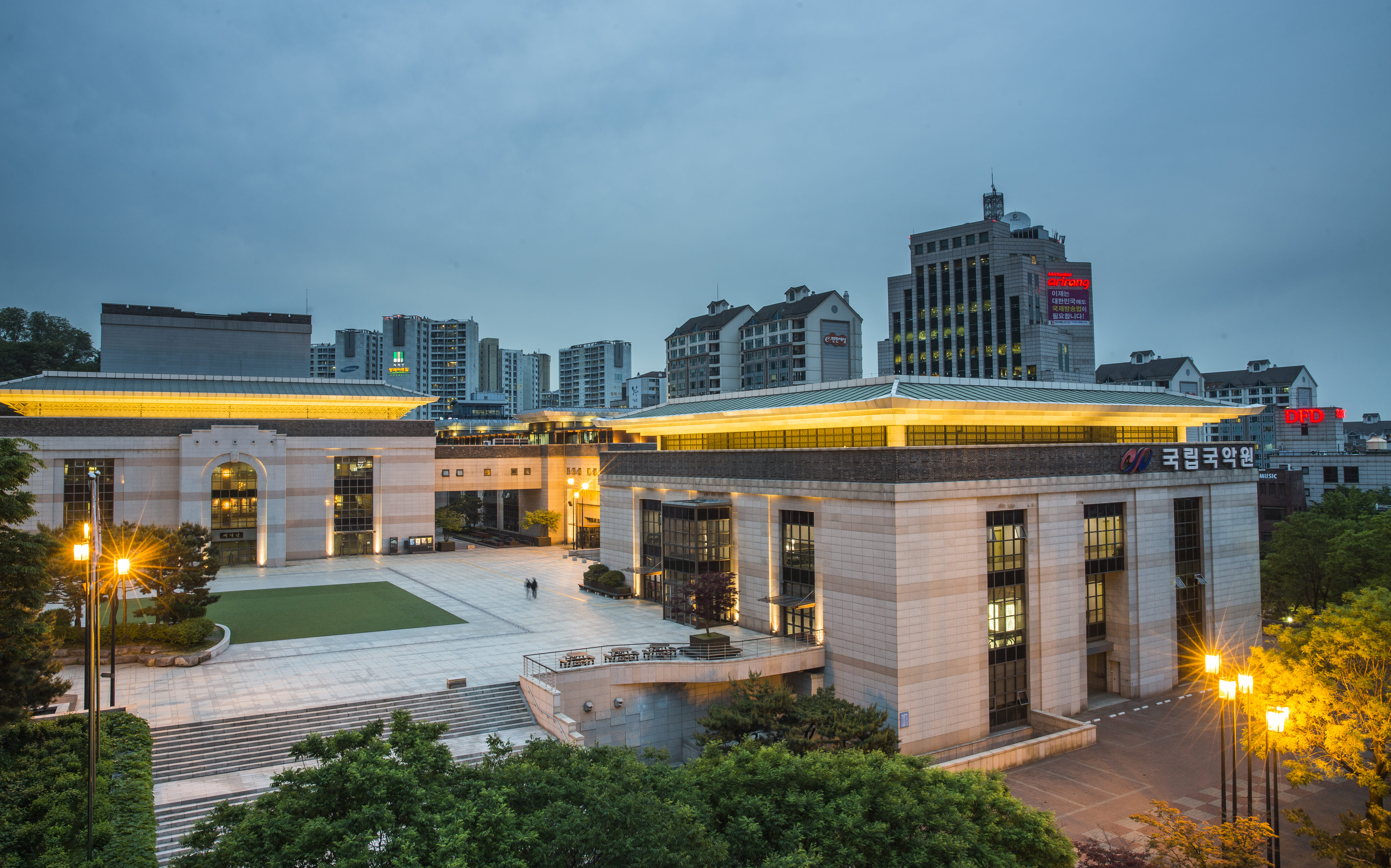
National Gugak Center is the headquarters of Korean traditional performing arts. Music is an essential part of Korean history, which stretches back over five millennia. The spirit of Korean music, the artistic expression of pleasure and excitement, is very much alive in the numerous performances given at the National Gugak Center (henceforth NGC).
NGC maintains a variety of assets ranging from the long standing traditions of court and popular music and dance to contemporary musical compositions for today’s audiences. NGC’s performing traditions and reinterpretations open a vast new world by broadening the scope of music made in the “here and now” with music that “has yet to come.”
NGC’s four pre-eminent performing groups, which are the Court Music Orchestra, the Folk Music Group, the Dance Theater, and the Contemporary Gugak Orchestra, have been at the forefront of reviving ancient court music and dance, traditional chamber music of non-professional musicians, and old popular music that thrived among common people.
Furthermore, by conducting studies of the long tradition of Korean music, NGC not only bolsters the preservation and transmission of Korean performing arts, but also elevates these traditions to entirely new heights. In addition, it offers diverse educational programs that promote Korean performing arts at home and abroad.
As a national institution, NGC was first established as Eumseongseo during the Silla dynasty (ca 7th century), which later became the Daeakseo of the Goryeo dynasty (at the end of the 10th century) and then the Jangagwon of the Joseon dynasty (1466) before becoming known as it is today. Founded on the principle of “creating the new based upon the old,” NGC continues to cultivate Korean music with the aim of making a contribution to the greater culture of humanity.